
Description
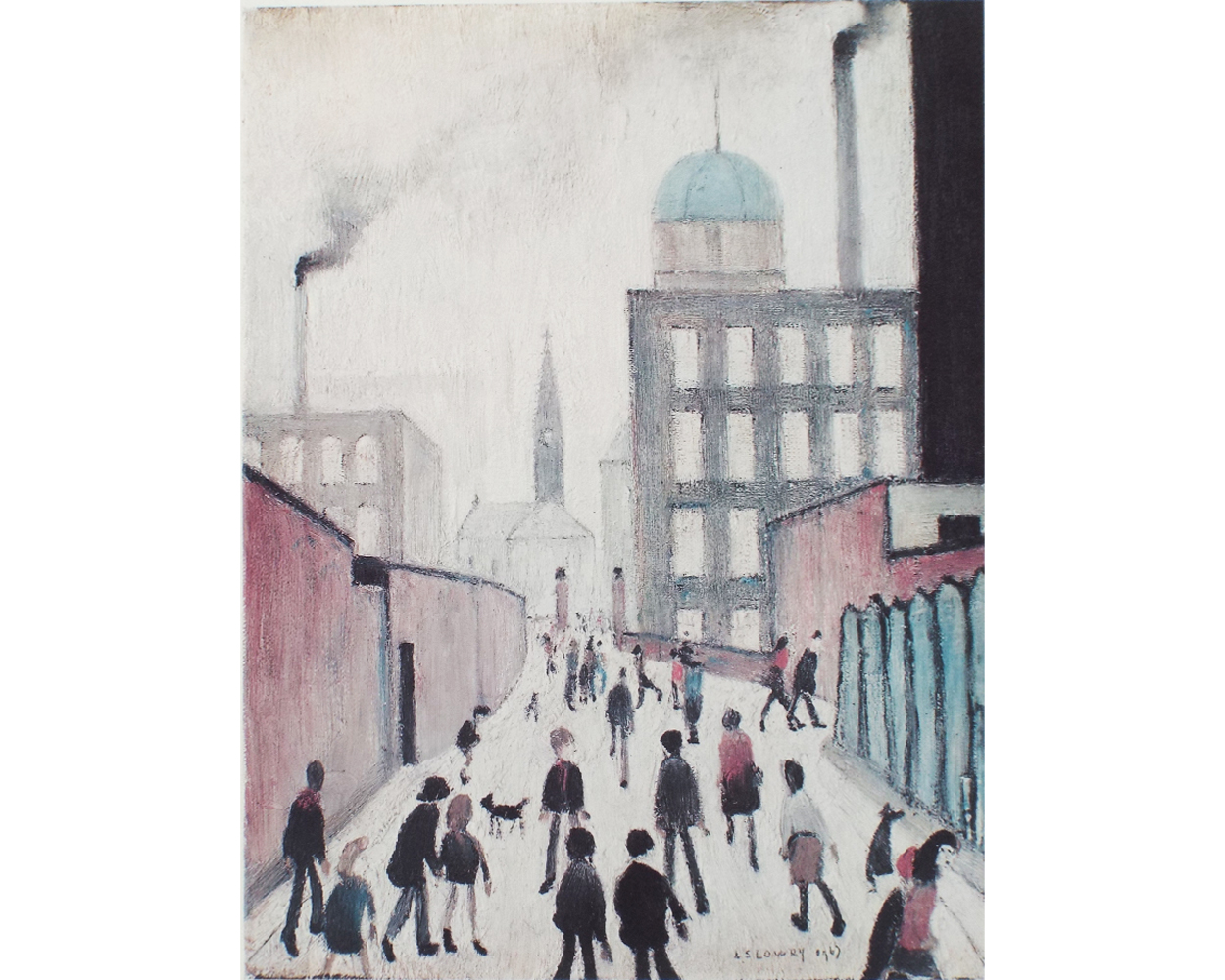
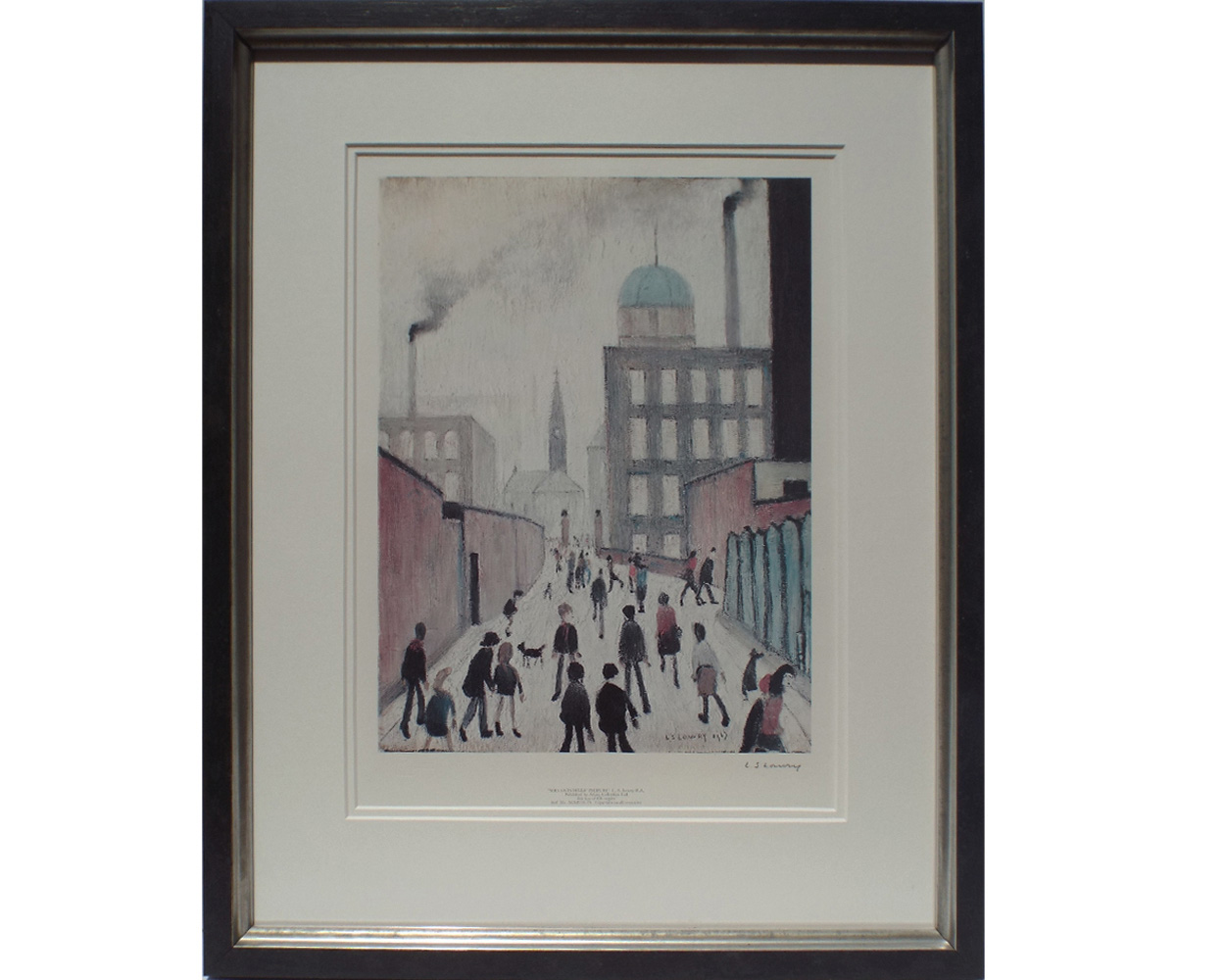
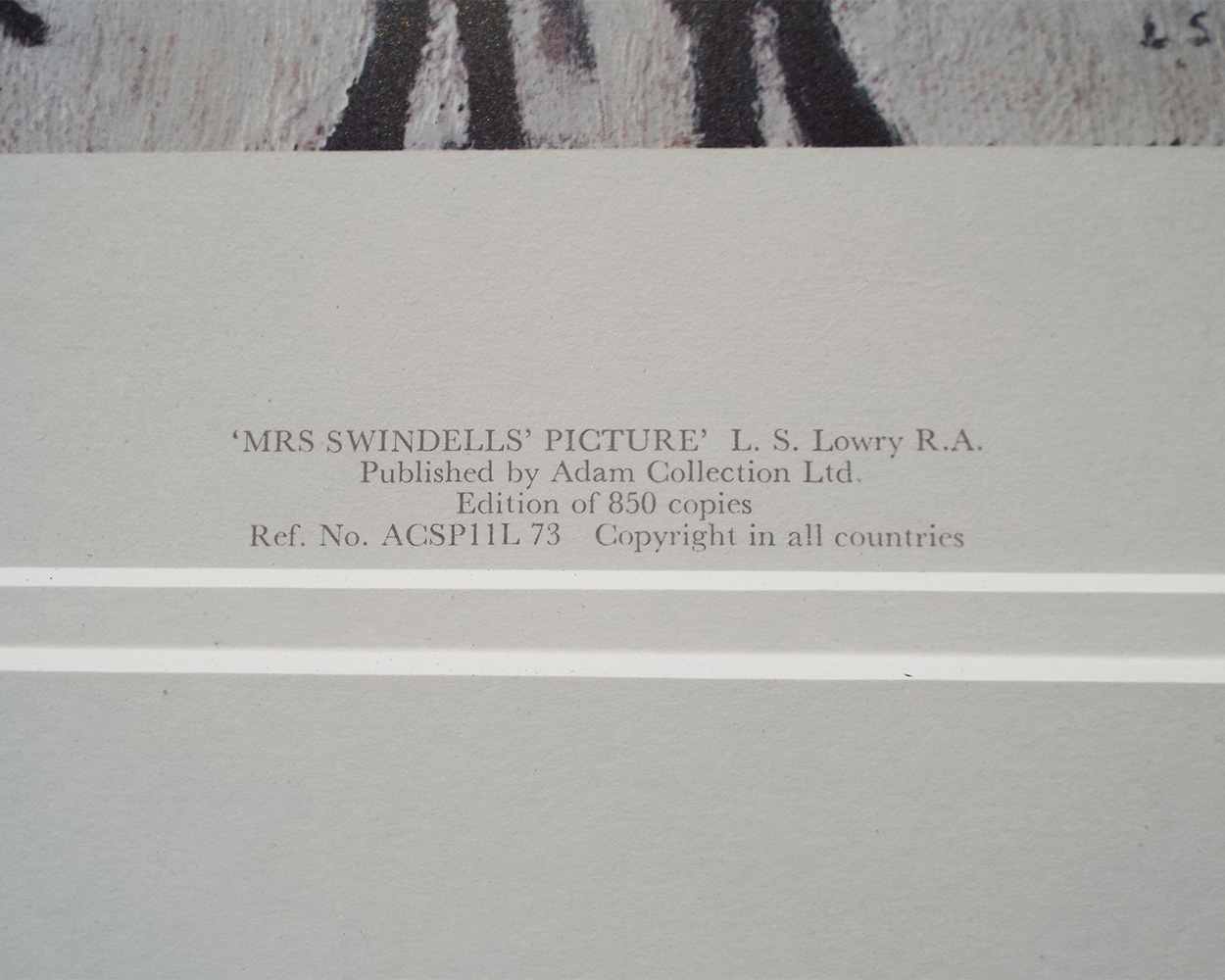
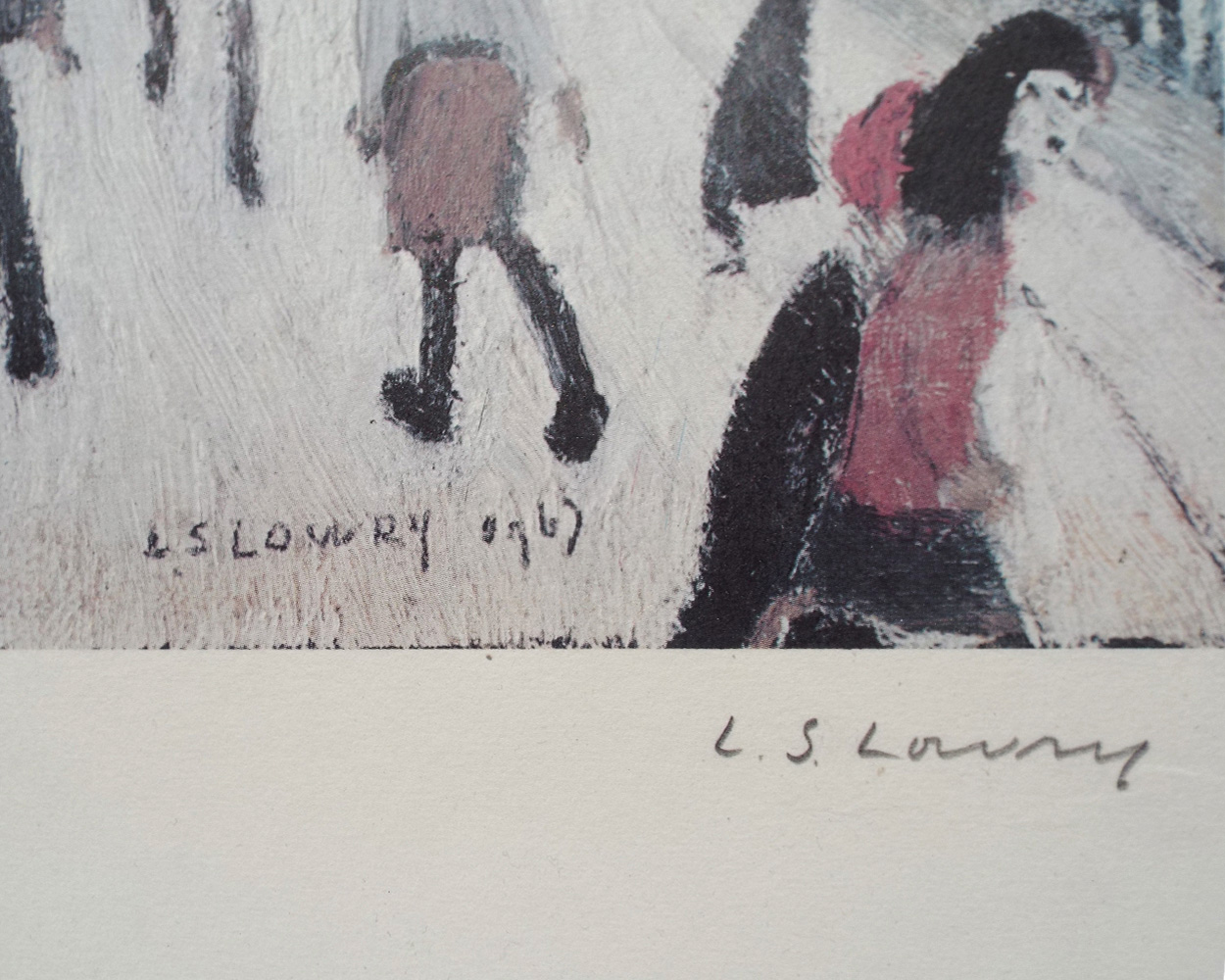
Limited Edition Print (#302/850) signed by L.S Lowry in Pencil on the bottom right margin.
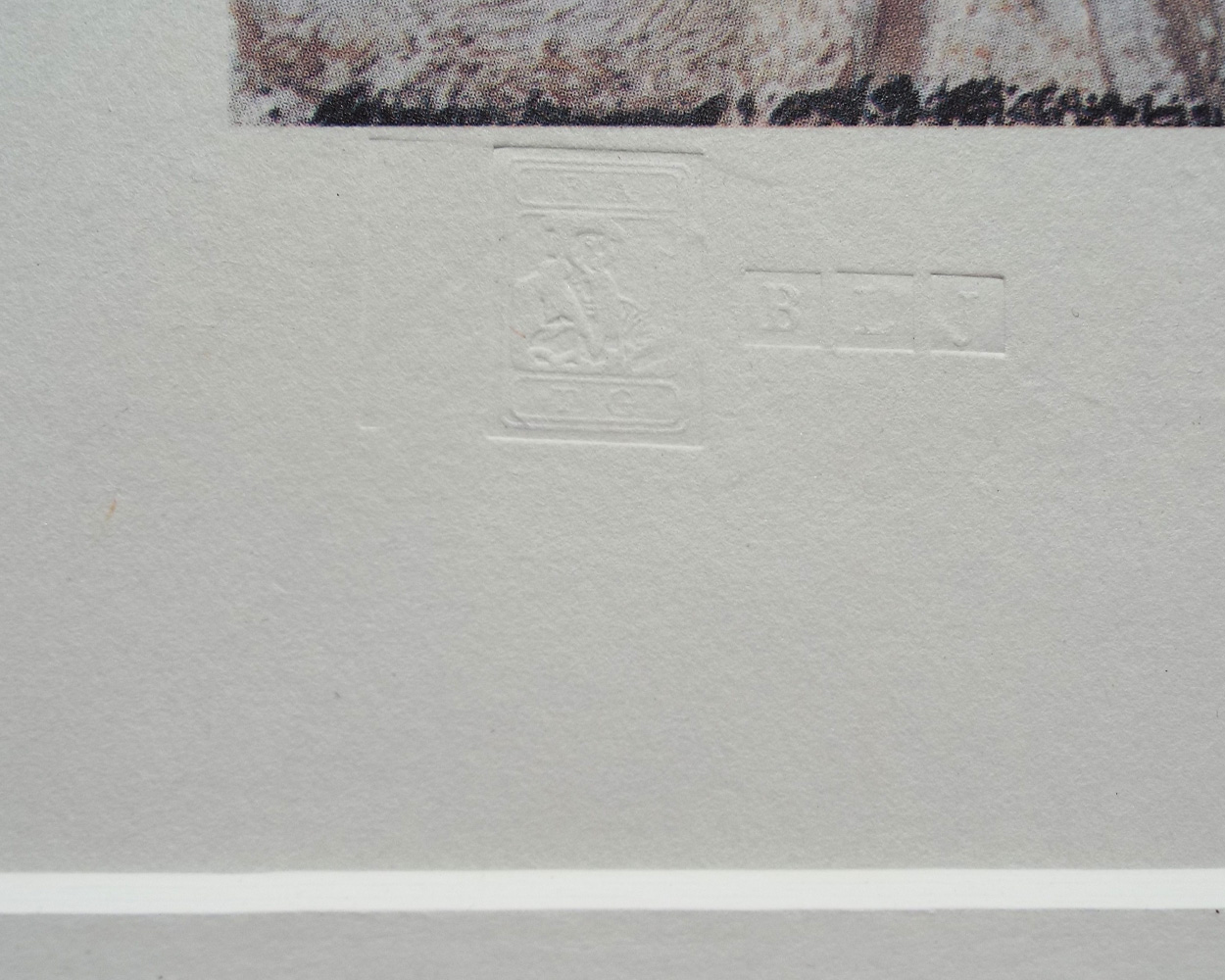
This piece has a Fine Art Trade Guild stamp of authenticity on the bottom left-hand corner beside the copyright.
About L.S Lowry
Laurence Stephen Lowry was one of Britain’s most distinctive and celebrated artists, renowned for his evocative depictions of everyday life in the industrial towns of North West England. Born in Stretford, Lancashire, Lowry spent much of his life in the Manchester and Salford area, where the factories, mills and terraced streets became the defining subjects of his work.
Working as a rent collector for most of his adult life, Lowry painted in his spare time, developing a highly individual style that was initially overlooked by critics but later recognised as a unique contribution to British art. His bustling urban scenes, populated by the famous “matchstick” figures, capture the rhythms of working-class life with remarkable humanity and observation. Although often associated with industrial landscapes, Lowry also produced striking seascapes, landscapes and enigmatic portraits that reveal the breadth of his artistic vision.
Lowry studied at the Manchester School of Art and later at the Salford School of Art, where he refined his technique while resisting fashionable artistic trends. His carefully limited palette of muted colours and simplified forms allowed him to focus on atmosphere, movement and social observation rather than decorative detail.
By the 1950s and 1960s, Lowry had become one of Britain’s most respected artists, exhibiting widely and receiving numerous honours. Today, his paintings are held in major public collections and continue to resonate with audiences for their honesty, warmth and enduring sense of place. While his industrial landscapes document a rapidly changing Britain, they also explore universal themes of community, isolation and the resilience of ordinary people.
Lowry’s work remains an enduring celebration of everyday life, transforming familiar streets and anonymous figures into timeless images that continue to captivate collectors, scholars and gallery visitors around the world.


